DO610 vs. DO630 for Factory Supervisors: Which Digital Output Module Wins When Robot Density Rises?
Why Output Module Choice Becomes Critical as Robot Density Climbs
Factory supervisors on automated lines face a quiet but consequential decision: when robot density rises, output point counts grow faster than most cabinet designs anticipate. According to the International Federation of Robotics (IFR), global industrial robot installations reached roughly 541,000 units in 2023, with robot density in manufacturing climbing steadily across Asia, Europe, and North America. In robot-heavy cells, every new gripper, stack light, safety relay, and valve island demands additional digital output channels. Supervisors often inherit cabinets originally sized for manual stations, leaving limited panel space and wiring headroom.
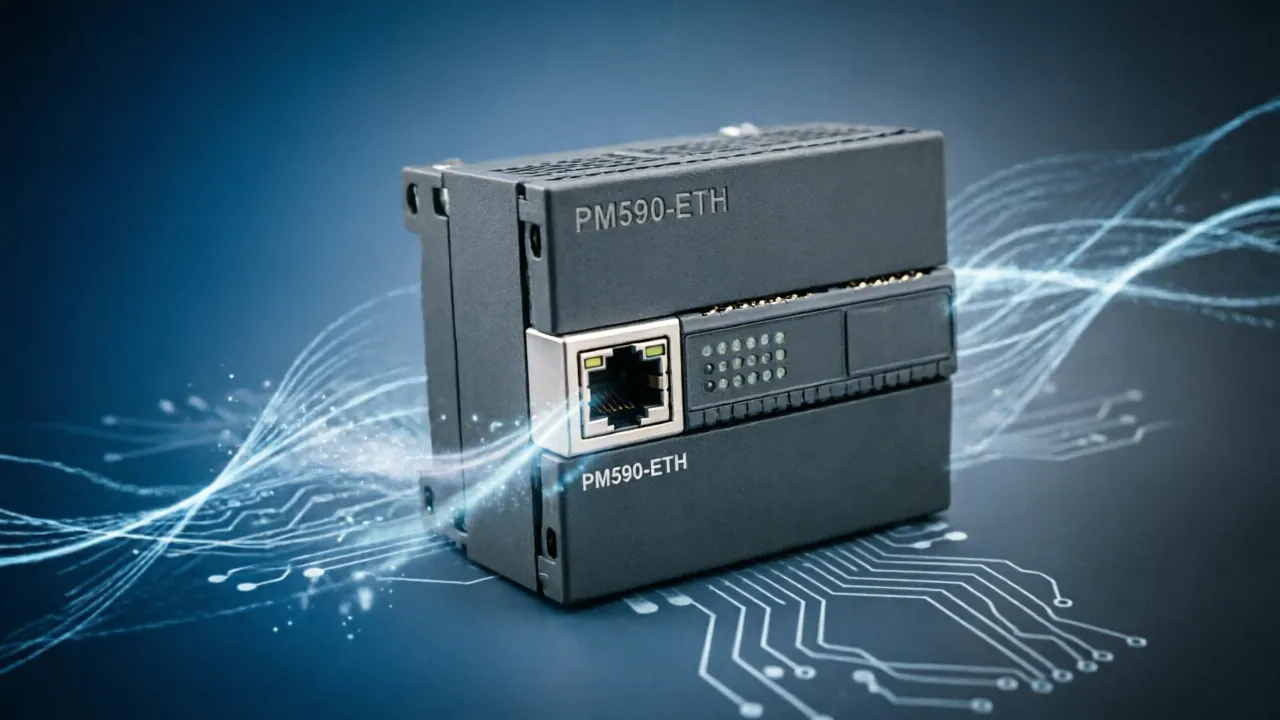
The practical question is straightforward yet easy to get wrong: should you buy density now with a DO630-class module, or preserve modular headroom with a DO610-class module? And how does a communication module like the PM590-ETH fit into the architecture? The long-tail question many supervisors ask is: why does output point growth accelerate faster in robot-dense cells than in manual stations, and how should that change my module selection today?
The Decision Point: Automation Growth Reshapes Output Architecture
When a line adds robots, the output profile changes in ways that are not always obvious from a station count. A single collaborative robot cell may require outputs for gripper actuation, vacuum and blow-off valves, status beacons, door interlocks, and safety reset indicators. Multiply that by incremental robot additions over a three-year horizon, and the output count can grow 40–70% depending on cell complexity, according to general control-panel design guidance published by organizations such as UL and IEC technical committees.
The core trade-off is density versus modularity. A denser module such as the DO630 packs more channels into a smaller footprint, which reduces cabinet size and per-point cost in stable, high-volume cells. A modular module such as the DO610 preserves expandability and simplifies staged growth, which matters in high-mix plants where robots are added incrementally. The PM590-ETH, as an Ethernet-based communication module, often sits at the center of this architecture, determining how output modules are addressed and how easily the system scales.
Spec-Level Comparison: Channels, Footprint, and Wiring Labor
Comparing the DO610 and DO630 at the specification level reveals where each module earns its place. The table below summarizes the practical differences supervisors should weigh, including wiring labor per channel and spare-capacity philosophy.
| Criterion | DO610 (Modular Class) | DO630 (Density Class) |
|---|---|---|
| Output configuration | Modular channel grouping; suited to staged expansion | High channel count per module; suited to fixed layouts |
| Cabinet footprint | Larger panel space consumption per point | Compact footprint; reduces panel size in dense cells |
| Terminal style and wiring labor | More inter-module wiring; labor scales with modules | Fewer modules to wire; labor concentrated per module |
| Spare-capacity philosophy | Headroom added module by module | Headroom must be planned upfront |
| Communication integration | Often paired with PM590-ETH for scalable addressing | Often paired with PM590-ETH for centralized control |
Automation density studies cited by industry bodies note that output point growth rates in robot-heavy cells can exceed initial forecasts by 30–50% over a three-year period. However, the assumption that denser modules always lower total cost is disputed. Denser modules reduce cabinet size and per-point hardware cost, but they can complicate troubleshooting and concentrate heat, which may increase maintenance time and thermal management effort.
Scenario-Based Selection: Two Plant Profiles
Profile A — High-mix plant adding collaborative robots incrementally. In this scenario, a supervisor adds two to four collaborative robot cells per year, each with varying end-of-arm tooling. The DO610's modularity simplifies staged expansion: each new cell adds output capacity without forcing a cabinet redesign. The PM590-ETH provides Ethernet connectivity that lets the supervisor address new modules without rewiring the entire network. Changeover frequency is high, so spare-parts policy favors keeping a small inventory of modular units. Panel thermal margin remains manageable because density is distributed across modules.
Profile B — High-volume cell with stable robot layout. Here, the supervisor operates a fixed robot layout with predictable output counts. The DO630 density minimizes cabinet size and per-point cost, which matters when panel space is at a premium. Spare-parts policy focuses on a few high-density modules rather than many small ones. Panel thermal margin requires attention because dense modules concentrate heat; the supervisor verifies load ratings and confirms lifecycle data before standardizing. The PM590-ETH centralizes communication, simplifying diagnostics across the dense output array.
Risks: Over-Specifying Density and Under-Planning Spares
Both module classes carry risks that supervisors should address neutrally. Dense modules such as the DO630 can complicate troubleshooting because a single fault may affect multiple points in a concentrated area, and heat concentration may shorten component life if panel ventilation is inadequate. Modular modules such as the DO610 can consume more panel space and add inter-module wiring, which increases installation labor and potential failure points.
General control-panel design guidance recommends maintaining 20–30% spare I/O capacity to accommodate future robot additions and unplanned output requirements. Supervisors should also verify load ratings and lifecycle confirmation for either module, and consider the risk of single-supplier lock-in when standardizing on a communication module such as the PM590-ETH. Diversifying spare-parts sources and documenting wiring schematics reduces long-term operational risk.
Practical Guidance for Standardization
Neither the DO610 nor the DO630 is universally superior. The robot density growth rate and expansion style should drive the choice. Supervisors should map a three-year output point forecast before standardizing, weighing channel count, footprint, wiring labor, and spare-capacity philosophy. The PM590-ETH can support either architecture, but its role in addressing and diagnostics should be planned alongside the output module decision.
For plants with incremental robot additions and high changeover frequency, the DO610's modularity often aligns with staged growth. For stable, high-volume cells with predictable layouts, the DO630's density can reduce cabinet size and per-point cost. In both cases, maintaining spare capacity, verifying load ratings, and planning thermal margin remain essential. Specific performance and cost outcomes depend on individual plant conditions and should be evaluated case by case.
Related Posts

Gold Laser Engraving Machines: A Complete Buyer's Guide for Beginners

How to Choose the Right Industrial Laser Cutter for Fabric: A Step-by-Step Buyer's Guide
5 Common Laser Coding Machine Problems and How to Troubleshoot Them

Sheet Metal Laser Cutting: A Beginner's Guide to Process, Benefits, and Applications