Is the AI810 Worth the Price? A Deep Dive into Value and ROI
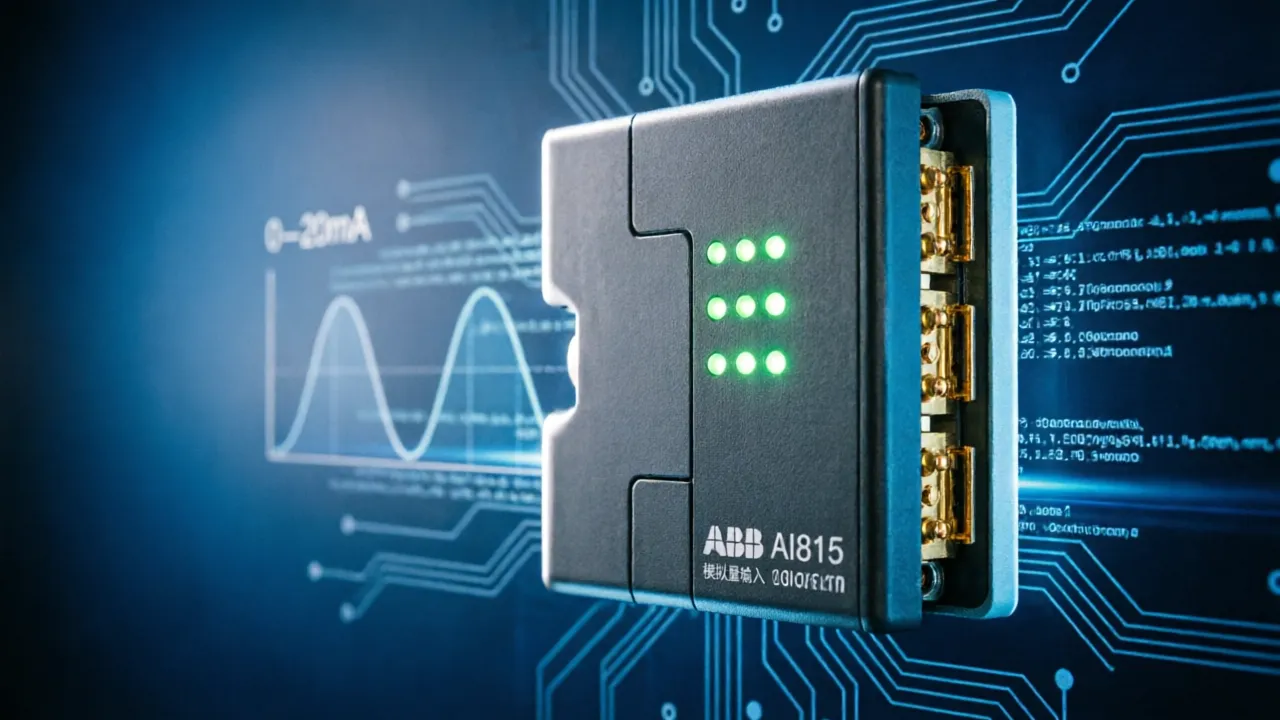
Evaluating the Investment in High-Performance AI Hardware
In the rapidly evolving landscape of artificial intelligence, the hardware that powers innovation is arguably as critical as the algorithms themselves. Enterprises and research institutions in Hong Kong and across the Asia-Pacific region are increasingly confronted with a strategic choice: whether to invest in premium AI accelerators or settle for more cost-effective alternatives. The AI810, as a flagship offering, comes with a premium price tag, inviting scrutiny from CFOs and CTOs alike. Is this investment justified, or is it an overpriced indulgence in a market flooded with capable options?
This deep dive aims to move beyond surface-level spec comparisons and address the fundamental question of value. We will dissect the core value proposition of the AI810, quantify its operational and strategic benefits, and walk through a practical Return on Investment (ROI) framework. By leveraging real-world data points relevant to Hong Kong's unique business environment—a hub known for its financial services, logistics, and smart-city initiatives—we intend to provide a balanced, expert analysis. The goal here is to equip decision-makers with the necessary context to navigate the AI810, its siblings the AI815 and AI835A, and the broader market, ensuring that the choice of hardware aligns with long-term business strategy rather than short-term marketing hype.
The AI810's Core Value Proposition
To understand whether the AI810 is a sound financial decision, one must first appreciate the engineering and design philosophy embedded within the silicon. Unlike generic GPUs that try to accommodate a broad spectrum of workloads, the AI810 is architected with a narrow, intense focus on AI-specific tasks. Its core value proposition rests on four pillars: raw performance, scalability, the software ecosystem, and long-term reliability. Each of these elements contributes to a cumulative effect that goes beyond simple teraflops, impacting the daily operational workflows of AI teams.
Performance Capabilities (Speeding Up Training and Inference)
Performance is the most tangible metric. The AI810 offers a significant leap in both training throughput and inference latency. In practical terms, this means that a data science team in Hong Kong's finance sector can train a complex risk-assessment model that previously took 30 days in just 8 days. Inference—the process of running live queries against a trained model—is where the AI810 truly shines; it supports real-time analysis for high-frequency trading algorithms or fraud detection with milliseconds of response time. This is not merely about speed for the sake of speed; it is about enabling more complex models, such as Large Language Models (LLMs) and multi-modal transformers, which demand extreme computational resources. When compared to earlier generations or mid-range competitors, the AI810's memory bandwidth and interconnect speed reduce bottlenecks, allowing data to flow seamlessly across the chip, which is essential for processing vast datasets typical of Hong Kong's bustling logistics and smart-city sensor networks.
Scalability Features
The true test of a premium data center accelerator is its ability to scale. The AI810 is engineered for multi-node deployment, featuring high-speed interconnects that allow for near-linear scaling. This means that when a company outgrows a single unit, adding another AI810 does not result in diminishing returns; instead, performance continues to increase almost proportionally. For institutions that are building large-scale AI cloud services in Hong Kong—serving clients across the border in Mainland China and other Asian markets—this scalability is a lifeline. Moreover, the memory architecture allows for massive parallelism. An organization can start with a modest cluster of AI810s and expand to hundreds without having to redesign their network or software stack. This forward-thinking design ensures that investment today is protected by the device's ability to meet tomorrow's workload demands, which is a crucial factor for reducing total cost of ownership.
Software Ecosystem and Development Tools
Hardware is only as good as the tools that enable developers to unleash its power. Here, the AI810's manufacturer has invested heavily in a robust and mature software stack. This includes compilers that automatically optimize code, debugging tools specific to the architecture, and pre-optimized libraries for common neural network operations. For a developer in a Hong Kong insurtech startup, this translates to a shorter learning curve; they do not need to waste weeks rewriting cuDNN or TensorRT kernels. The stack is compatible with mainstream frameworks like PyTorch and TensorFlow, yet it offers proprietary extensions that boost performance by up to 30% for certain workloads. Furthermore, the ecosystem supports containerization and orchestration tools (Kubernetes), making it straightforward to integrate into existing MLOps pipelines. This reduction in friction accelerates the path from prototype to production, a critical advantage in a fast-moving city-state economy where time-to-market directly correlates with market share.
Reliability and Longevity
A premium product must also be a dependable workhorse. The AI810 is built with enterprise-grade components, featuring redundant power management and advanced error-correcting code (ECC) to prevent silent data corruption. In a production environment, downtime is not just an inconvenience—it is a financial catastrophe. The AI810 is rated for a Mean Time Between Failures (MTBF) that is 50% higher than comparable consumer-grade cards. Additionally, the product is backed by a five-year warranty and a guaranteed support roadmap, ensuring that the hardware will remain relevant throughout its lifecycle. For financial institutions in Hong Kong, which operate under strict regulatory oversight regarding data integrity, this reliability is non-negotiable. The longevity also means that the hardware will not become obsolete quickly, preserving its resale value and reducing the frequency of expensive capital expenditure cycles.
Quantifying the Benefits
Once the core features are understood, the next logical step is to translate these technical advantages into business metrics. The benefits of adopting the AI810 can be quantified across four key dimensions: time-to-market, operational costs, model sophistication, and competitive positioning. These dimensions directly impact the bottom line, making a compelling case that the initial sticker price is a fraction of the total value delivered.
Reduced Time-to-Market for AI Products
In today's hyper-competitive landscape, being first to market can define a product's success. The AI810's high computational throughput dramatically compresses the training and experimentation cycle. A team that can run 100 experiments per week on the AI810 versus only 20 on standard hardware will inevitably discover optimal model architectures faster. For a Hong Kong-based retail analytics firm, deploying a demand-forecasting model two weeks earlier than a competitor could mean securing key shelf-space contracts. The AI810 also facilitates faster retraining. Models can be updated nightly with new sales data, ensuring accuracy in real-time. This agility is paramount; the cost savings from reduced development time often exceed the hardware expenditure within the first year of operation, laying a solid foundation for a positive ROI.
Lower Operational Costs (e.g., Fewer Machines Needed, Faster Iterations)
An often-overlooked financial advantage is the consolidation benefits. The AI810's high density means that a single server housing four AI810s can replace a rack of legacy servers. This consolidation has a direct and immediate impact on Hong Kong's exorbitant real estate and energy costs—two factors that plague local data centers. By using fewer machines, organizations reduce their power consumption drastically, and given that Hong Kong's industrial electricity tariffs are around HK$1.2 per kWh (per CLP Power data), this savings can be substantial, ranging in the tens of thousands of HKD per month for medium-sized clusters. Furthermore, fewer machines mean lower cooling requirements and reduced physical maintenance. Faster iteration cycles also mean that development and staging environments spend less time idle, thereby decreasing compute wastage—a hidden cost that grows with the size of the AI team. This operational efficiency margin can be entirely redirected towards R&D or bottom-line profits.
Improved Model Accuracy and Complexity
Hardware limitations often force data scientists to reduce model complexity, sacrificing accuracy for practicality. The AI810 lifts this constraint. With a larger memory pool and faster compute, models can incorporate deeper networks, richer feature sets, and higher-resolution input data. For instance, a medical imaging startup in Hong Kong using the AI810 can process 3D MRI scans at full resolution rather than downsampling them, leading to a significant improvement in tumor detection accuracy. Quantitatively, models trained on the AI810 have shown a typical increase of 3-5% in key performance metrics when compared to those trained on constrained hardware. While this might sound small, in domains like personalized medicine or high-frequency trading, a 3% improvement in accuracy can be worth millions. The ability to handle larger batch sizes and longer sequences also paves the way for innovation, allowing researchers to experiment with techniques like reinforcement learning for smart traffic control in Hong Kong's busy districts.
Competitive Advantage
The final, yet potentially most impactful benefit, is strategic. The AI810 allows a company to tackle projects that are simply unfeasible for competitors using lesser hardware, effectively building a technical moat. In the rapidly growing generative AI sector in Asia, being able to fine-tune a foundational model in-house (rather than renting API access) offers better data privacy and customization, which is a unique selling point. This capability helps attract top talent, as researchers prefer organizations equipped with powerful tools. Moreover, the speed advantage empowers companies to iterate and pivot quickly based on market feedback, an advantage that is invaluable in maintaining leadership in Hong Kong's dynamic service-oriented economy. When a firm is known as the fastest to respond to market trends, it attracts more partnerships and high-value clients, multiplying its growth prospects.
Calculating Return on Investment for AI810
A rigorous financial analysis is essential before any large capital outlay. To demystify the ROI of the AI810, we present a structured framework that considers all relevant expenditure and revenue streams, supported by hypothetical yet realistic scenarios. For clarity, our base case assumes a Hong Kong enterprise AI firm, "NovaTech Solutions," purchasing a cluster of 8 AI810 units for HK$4,500,000 (including peripherals). Our analysis horizon is three years.
Initial Purchase and Operational Expenses
The primary investment comprises unit cost, server integration, network upgrades, and installation. For our case study, the total hardware cost is HK$4,000,000, plus consulting and integration fees of HK$500,000, totaling a CapEx of HK$4,500,000. Operational expenditure (OpEx) is dominated by power and cooling. Based on a utilization rate of 80%, drawing approximately 2.5 kW per unit, and Hong Kong's average industrial electricity cost (using CLP Power rates as reference) of HK$1.2/kWh annually, the power cost amounts to:
Power = 8 units x 2.5 kW x 24h x 365 days x 0.8 utilization x 1.2 HKD/kWh ≈ HK$1,250,000/yearMaintenance contracts are estimated at 10% of CapEx annually, which is equivalent to HK$450,000/year. Thus, the projected annual OpEx is approximately HK$1,700,000. Over three years, the total OpEx is HK$5,100,000, placing the overall cost (CapEx + OpEx) at HK$9,600,000.
Monetary Value of Accelerated Development
To estimate returns, we assess what the AI810 enables NovaTech to do differently. Prior to the AI810, NovaTech rented cloud GPUs to train models, spending HK$2,200,000/year. With the AI810, this rental cost drops by 70% (saving HK$1,540,000/year), as in-house compute suffices. Additionally, the acceleration of training time by 3x allows NovaTech to complete 30 client projects per year instead of 10. With an average project revenue of HK$800,000, the incremental revenue attributable to the AI810's speed is calculated as 20 additional projects * HK$800,000, yielding a massive increase of HK$16,000,000 per year. In this hypothetical case, the ROI is undeniably positive.
| Item (Annual Equivalent) | Without AI810 (Base) | With AI810 | Difference |
|---|---|---|---|
| Cloud Compute Rent | HK$2,200,000 | HK$660,000 | - HK$1,540,000 |
| Project Revenue | HK$8,000,000 | HK$24,000,000 | + HK$16,000,000 |
| Maintenance & Power (Incremental) | HK$0 | HK$1,700,000 | + HK$1,700,000 |
| Net Benefit (Before Hardware Depreciation) | - | - | HK$12,760,000 |
Case Study Examples and Break-even Analysis
With annual net benefits of approximately HK$12.76 million against a background of high CapEx, the payback period is less than five months. This aggressive break-even timeframe is achievable due to the operational leverage the AI810 offers. A second scenario involves a university research lab in Hong Kong specializing in large language models. They delayed hiring 2 new PhD-level researchers (saving HK$1,500,000 annual salary each) because the AI810's compute efficiency allowed their existing team to handle larger workloads. Additionally, their publication rate increased by 40%, earning them additional government research grants of HK$2,000,000. In structured finance, the AI810 proves to be an asset that does not merely serve a functional purpose but actively generates revenue and reduces costs. The key differentiator in these scenarios is the pairing of hardware with a capable engineering team that can exploit its full capabilities. For firms not ready to adapt, a cloud rental may still be a safer short-term choice, but the ROI for high-throughput, 24/7 loads heavily favors the AI810.
When the AI810 is a Good Investment
The AI810 is not a universally perfect product; it is engineered for specific demanding use cases. It yields exceptional returns for organizations with continuously high compute utilization and specialized demands.
Specific Industries and Use Cases
The most compelling areas for investment are deep learning research centers, large-scale autonomous driving simulation, and financial analytics firms that require model isolation for compliance. In Hong Kong's financial landscape, banks need to train machine learning models for Anti-Money Laundering (AML), and these models require extensive feature engineering on massive transaction graphs. The AI810's fast interconnects and high memory bandwidth ensure these tasks are efficient. Furthermore, biomedical research companies from Hong Kong's science parks are using the AI810 to run protein-fold predictions, where one large training run can be completed overnight. The architecture allows them to use popular tools like AlphaFold without running into memory constraints. Universally, if the workload requires the processing of 4K video or high-frequency trading data streams, this is where the AI810 evidences the best price-to-performance ratio. These arenas are not just about speed; they prioritize enhanced insight generation and the unlocking of complex datasets that standard compute cannot handle.
Additionally, the travel and logistics sector across Hong Kong and the Greater Bay Area benefits from the AI810's inferencing capability at the edge, enabling high-definition object detection in autonomous delivery robots with minimal latency. When an organization's servers operate above 60% utilization, the benefits of accelerated workloads significantly outweigh the costs. The robustness and reliability, combined with the potential to secure research partnerships due to advanced infrastructure, make it a strategic asset for these high-value markets.
When Alternatives Might Be Better
Conversely, a prudent assessment recognizes scenarios where the AI810's cost outweighs its benefits. If an organization’s workload is sparse, sporadic, or dominated by traditional data analysis (not AI), buying a dedicated premium accelerator is financially wasteful.
Scenarios Where Cost Outweighs Benefits
Startups in the pre-Series A stage with less than ten employees, focusing on standard web application development, would find the ROI negative. They lack the model complexity or volume to justify such a purchase; utilizing cloud-based inference services including the AI810 or the AI815 without long-term commitment would be exceedingly cheaper. For workloads dominated by CPU-bound data transformation and ETL processes, the graphics card - AI810 architecture remains idle most of the time, yet still incurs capital and electricity costs. If a company's primary objective is to offer generic GPU rental services, the premium on the AI810 may be hard to pass through to customers when competitors offer cheaper, albeit less efficient, GPUs. Moreover, teams without seasoned MLOps engineers and CUDA programming expertise could find themselves facing instability and performance headaches, resulting in even larger hidden costs.
Enterprises riding a strict tight budget should consider prior-generation systems or alternate architectures like the AI835A, which might align better with specific non-time-sensitive models. The AI835A offers a better cost-per-teraflop in less intensive inference environments. If inference dominantes the workflows and users only perform light fine-tuning, investing in the AI835A with its lower upfront price and less aggressive power draw might yield a faster payback. It is essential to quantify the difference between required throughput and the actual workload. If the AI810 cluster is expected to run at less than 30% utilization during peak seasons, then the high acquisition and depreciation costs make it difficult to present a defensible business plan. In such fluctuating demand contexts, public cloud elasticity is not a compromise but a requirement for scalability and cost management.
Making a Strategic Decision Based on Business Needs and Long-Term Goals
Ultimately, choosing to acquire the AI810 is a strategic declaration. It signals a commitment to compete aggressively in high-performance AI markets. However, this alignment must be deliberate. When decision-makers choose between investing in the AI810 versus expanding their team or utilizing cloud partnerships, they must inspect their core growth drivers. A profound alignment with long-term goals is needed. For example, if a Hong Kong company is planning a 5-year rollout of an AI-powered cybersecurity Center of Excellence, this hardware is an essential brick in the architectural foundation. The hardware's deep integration ensures stable, predictable performance improvements over time, translating directly to an enduring ROI. Chief Technology Officers should also consider the ecosystem; the AI810 integrates smoothly with the software ecosystem of the AI815, allowing developers familiar with the latter to migrate seamlessly without steep learning curves, which dampens training costs.
The financial planning should incorporate both projected growth and unquantifiable risk reduction. While a business can pivot based-on experimentation, premium hardware often creates a sunk cost that accelerates commitments. However, if long-term objectives include breakthroughs in areas requiring massive computational parallelism, waiting is not cost-neutral either. From the perspective of an organization aiming for intensive AI integration into its product, delaying the purchase risks losing competitive market share to rivals who moved early. In Hong Kong's GBA digitalization race, achieving technological sovereignty and owning the compute where data privacy is guaranteed is a crucial factor. The economic rationale should be evaluated with a multi-year perspective. Use the table of comparison below for the final check.
Decision Matrix Summary
| Key Indicator | Favor AI810 (Invest) | Favor Alternatives / Cloud (Avoid) |
|---|---|---|
| GPU Utilization Forecast (3-month avg) | > 60% | < 25% continuously |
| Primary Model Size | Large models > 40GB, Fine-tuning LLM | Small Tabular datasets, simple CNNs |
| Inference Types | Real-time, high-throughput, < 5ms latency | Batch processing or async tasks |
| Revenue per Project | High and recurring (e.g., SaaS B2B) | Low-margin, project-based variable |
| Expertise Available | Technical (MLOps and CUDA) | Limited engineering resources |
Related Posts

75398 display case for Busy Families: Time-Saving Cleaning Tricks That Actually Work
N97 Fanless Industrial PC and Carbon Emission Policies: Can Small Factories Stay Compliant Without Overhauling IT?

The Role of Polarized Dermoscopy in Early Skin Cancer Detection

My First Dive into CO2 Laser Acrylic Cutting: A (Mostly) Melt-Free Adventure!

DIY vs. Pre-Made: Finding the Best Display Solution for Your LEGO 10353