Save Money on International Calls While Traveling: A Budget Traveler's Guide
The Dream Versus the Reality of Global Connectivity
The allure of international travel is often shadowed by the practical challenge of staying connected. Every budget traveler dreams of seamlessly sharing moments, navigating foreign cities, and checking in with loved ones without the looming dread of a monstrous phone bill. The fantasy involves effortless communication, where a quick call home to confirm an itinerary or a voice message to a friend feels as natural and cost-free as it does at home. However, the stark reality for many is a jarring confrontation with 'bill shock' upon their return. Traditional international roaming, the default setting on most consumer plans, operates on a pricing model designed for infrequent, emergency use, not for the data-hungry, communication-rich lifestyle of a modern traveler. A short five-minute call from a European capital to the United States can easily cost $5 to $10, and a few casual minutes of video streaming for navigation can burn through $50 in data charges. This financial pitfall is the primary reason many travelers either disconnect entirely or return to a fiscal headache that overshadows the memories of their journey. Smart planning, therefore, isn't just a luxury; it's a financial necessity for anyone wanting to balance the modern need for connectivity with the finite budget of a globetrotter.
The True Cost of International Communication
The Perils of Traditional Roaming
The most significant cost trap for the unwary traveler is standard international roaming. When your phone connects to a foreign network, it does so under a complex web of agreements between your home carrier and the local provider. These agreements often result in exorbitant per-minute rates for voice calls, high per-megabyte charges for data, and substantial fees for sending text messages. Unlike domestic plans which bundle services for a flat fee, international roaming charges are typically pay-as-you-go at premium prices. For example, while a local resident in Hong Kong might pay a few Hong Kong cents per minute for a domestic call, a roaming traveler from the US could be charged upwards of $2.00 USD per minute to make a call back home. Data roaming is even more perilous. A single automatic background update from a social media app, a map loading tile, or an email syncing can consume several megabytes, leading to charges that accumulate faster than most travelers expect. This system often lacks transparency, and the bill shock arrives weeks later, a rude awakening to the true cost of staying connected without a proper international calling plan.
Different Pricing Models: Per-Minute vs. Bundled vs. VoIP
Navigating the landscape of international calling requires understanding the different ways providers charge for their services. The most traditional model is the per-minute rate, common with standard roaming and some older prepaid SIM cards. This is simple but often the most expensive for any extended conversation. A simple 30-minute chat to family can become a significant expense. In contrast, bundled plans, such as those offered by global SIM providers or as travel add-ons from your home carrier, offer a set amount of minutes, texts, and data for a fixed price. For instance, a 7-day travel pack for Southeast Asia might cost $30 and include 100 minutes of voice calls and 2GB of data. This offers predictability but can be wasteful if you don't use the full bundle, or restrictive if you need more. Another model is the data-based VoIP (Voice over Internet Protocol) model. This is the foundation upon which apps like WhatsApp, FaceTime, and Skype operate. Here, you don't pay for the call itself; you pay for the data used to facilitate the call. The cost is directly tied to your data plan. If you have a cheap local data SIM in Hong Kong costing $10 for 10GB, a one-hour voice-only WhatsApp call might consume only 30-40MB, costing about $0.04. This makes VoIP the most cost-effective method when you have a robust data connection. Understanding these models allows you to choose the one that best fits your specific travel habits, whether you're a heavy talker or a data-centric communicator.
Budget-Friendly Strategies for International Talk
Master Wi-Fi Calling and VoIP Apps
The single most powerful weapon in a budget traveler's communication arsenal is the use of Wi-Fi calling and Voice over Internet Protocol (VoIP) applications. This strategy leverages existing data connections—whether through a local Wi-Fi network or a mobile data plan—to transmit your voice as data packets. The core advantage is that a call from a hotel Wi-Fi in Rome to a number in New York is essentially 'free' if the Wi-Fi is complementary, and it's very cheap if you are using a low-cost local data SIM. Applications like WhatsApp, Apple's FaceTime Audio, Skype, Telegram, and Google Voice have become ubiquitous for a reason. They offer high-definition voice quality that often surpasses traditional cellular connections, provided you have a stable internet link. For calls to other users of the same app, the service is typically free. For calling traditional phone numbers, services like Skype offer very low per-minute rates (often a few cents per minute) using their credit system.
The biggest 'pro' of this method is the potential for near-zero cost. In destinations like South Korea or Japan, where free public Wi-Fi is abundant, a traveler could easily go weeks without spending a cent on voice calls. However, there are cons. The primary one is dependency on Wi-Fi availability. Without it, the VoIP call will eat through your mobile data allowance, which could be costly if you are using a small roaming data pack. Another consideration is that some countries, like China and the UAE, have historically restricted or throttled certain VoIP services (like WhatsApp and FaceTime), requiring travelers to use alternatives like WeChat. A practical tip is to always download offline maps and essential information before you set off. When you actively seek out free Wi-Fi—in cafes, libraries, airports, and hotels—you can make your necessary calls. For non-essential updates, using text or messaging features within these apps uses significantly less data than a voice call. This strategy is particularly effective for phone plans for international students who often have limited budgets and reside in urban areas with strong, subsidized campus Wi-Fi networks.
Embrace Local SIM Cards for Deep Connectivity
Perhaps the most time-tested, cost-effective solution for any traveler spending more than a few days in a single country is to purchase a local SIM card. The logic is brutally simple: local telecom companies offer local rates. Instead of paying a premium for a 'roaming' service, you are, for all intents and purposes, operating as a temporary local customer. The cost advantage is staggering. For a traveler from the USA, a local SIM in Thailand can provide 30GB of 4G/5G data and unlimited local calls for around $10. In contrast, a global roaming plan for the same amount of data could cost $100 or more. The process of acquiring a SIM is generally straightforward. Most international airports have dedicated counters for major local carriers (e.g., AIS in Thailand, Vodafone in the UK, CMLink in Hong Kong). Staff are accustomed to tourists and can often set up the SIM, cut it to the right size, and explain the plans in English. Local 7-Eleven stores and phone shops are also reliable sources, often at slightly cheaper prices than the airport.
However, this method has its considerations. The most critical is that your personal phone must be 'unlocked' by your home carrier. You can usually request this for free after your contract is fulfilled. A second hurdle can be the language barrier. While airport staff speak English, reading the terms and conditions of a Thai or Japanese plan can be challenging. Furthermore, activation processes can vary. Some SIMs are plug-and-play; others require you to register your passport and may require specific APN settings. A significant downside for the traveler moving between countries is that a Thai SIM becomes useless once you fly to Vietnam. You would then need to purchase and install a new Vietnamese SIM, which can be a nuisance for multi-country trips. Nevertheless, for the traveler focused on one or two countries, or the budget-conscious international student settling in for a semester, the local SIM remains the gold standard for value.
Explore Affordable eSIM Options for Digital Nomads
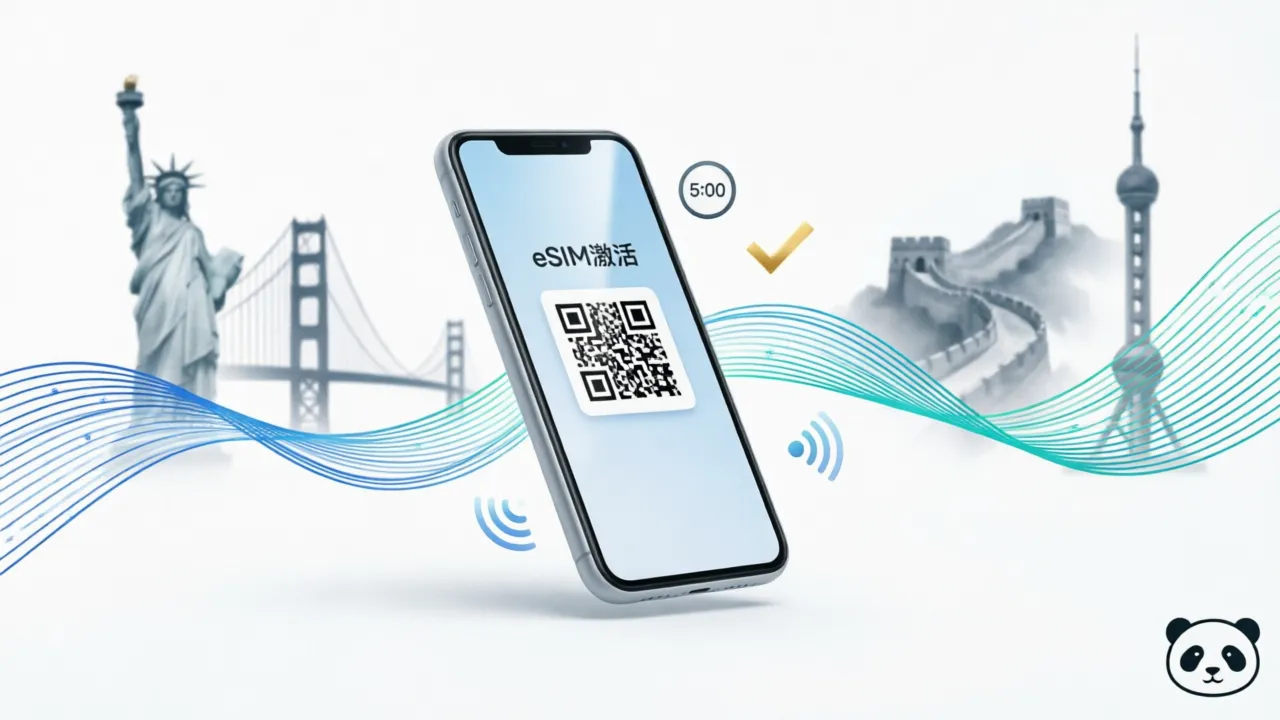
In recent years, the eSIM (embedded SIM) has emerged as a revolutionary, convenient alternative to the physical SIM card. An eSIM is a digital SIM that allows you to activate a cellular plan from a carrier without having to use a physical SIM card. This offers tremendous advantages for travelers. The convenience is unbeatable: you can purchase and activate a plan from an app (like Airalo or Holafly) before you even leave your home country. Upon arrival, you simply activate the eSIM profile on your phone, and you are instantly connected. There is no frantic search for a local shop, no need to swap out your existing physical SIM (thus keeping your home number active for 2FA codes), and no risk of losing a tiny piece of plastic.
The cost-effectiveness of eSIMs, especially for data, has improved dramatically. Many 'regional' eSIM plans, covering all of Europe or Southeast Asia, offer competitive rates. A 10-day, 5GB global eSIM plan might cost $20. However, a crucial nuance for our topic of calling is that most of the lowest-cost eSIMs are data-only. They are designed for browsing, social media, and crucially, for VoIP calling. This aligns perfectly with the strategy of using apps like WhatsApp, as you'll have a dedicated high-speed data connection. Some premium eSIM providers are starting to offer full plans with a local phone number and traditional voice minutes, but these are often more expensive than the data-only variants. When researching a plan, a traveler should carefully check the product description for 'voice' or 'calls.' For the us sim card for chinese travelers, this is an excellent option. A Chinese traveler can buy a US-specific eSIM plan (e.g., from T-Mobile or AT&T’s prepaid eSIM partners) that includes a US number and data. This allows them to make and receive calls to family in China using a US local number via the eSIM’s data, avoiding China’s strict VoIP regulations. The eSIM has effectively streamlined the acquisition of connectivity, making it a top choice for tech-savvy, multi-country travelers.
Strategic Use of Selective Global SIM Cards
While local SIMs are best for single-country stays, and eSIMs excel for digital convenience, 'global' SIM cards occupy a specific niche. These are physical SIMs or eSIMs from specialized providers (like OneSimCard, TravelSim, or KnowRoaming) that offer a single SIM with pre-loaded credit usable in multiple countries. Their main strength lies in the 'one-number, one-bundle' simplicity for travelers flitting between multiple countries on a single trip. Instead of buying a new SIM in Japan, then another in Korea, the global SIM works in both. The pricing model for these is usually pay-as-you-go, often with very competitive inbound call rates (i.e., it's free for someone to call you). They are also useful for keeping a consistent phone number.
However, they are rarely the cheapest option for heavy data users or high-volume voice calls. Their per-minute costs for outbound calls are often higher than a local SIM. For example, a call from a global SIM to a US number might cost $0.30 per minute, while a local SIM in Mexico might charge $0.05. Therefore, they are best for 'infrequent, short international calls across multiple countries.' A European backpacker spending three days in each of five Asian countries would find a global SIM convenient for checking in with family every few days. But that same backpacker would likely benefit more from a cheap local eSIM for data and using VoIP for longer chats. These cards should also be considered a safety net—a way to ensure you have connectivity from the moment you land, even if your primary strategy is to buy a local SIM later.
Home Carrier Travel Add-ons (Approach with Caution)
Many major network providers (like Verizon, T-Mobile, AT&T, EE, Vodafone) now offer specific 'travel passes' or 'roaming add-ons' for their customers. These allow you to use your domestic plan's allowances (minutes, texts, data) in a foreign country for a fixed daily fee (e.g., $10 per day in over 210 countries) or a weekly pass. The primary appeal is simplicity and convenience: you keep your phone number, you don't need to change any settings, and the experience mimics using your phone at home, albeit at a higher cost. For a business traveler on a two-day work trip with an expense account, this may be the best option. For a budget traveler, it is often the most expensive one. The daily fee adds up quickly. A $10/day pass for a two-week trip costs $140. A local SIM in the same region might cost $15 for the entire trip with generous data. The only time to genuinely consider this option is if your cost-benefit analysis shows it is cheaper for your specific needs. For example, if your trip is only 3-4 days in a single country, the convenience cost might be worth it to avoid the hassle of setting up a new SIM. But beware: these passes usually have a fine print. Some carriers still charge per-minute for calls to non-domestic numbers, or they throttle data speed after a certain cap. Always do the math and compare it against the other options before committing. For the budget traveler, the international calling plan from your home carrier should be a last resort, not the first choice.
Smart Usage Tips to Avoid Overspending
Even with the best plan, careless usage can lead to unexpected charges. The first golden rule is to set data limits on your smartphone. Both iOS and Android have settings that allow you to turn on 'Low Data Mode' and set a specific data cap. When that cap is reached, the phone will stop using mobile data, preventing background apps from incurring charges. A corollary to this is to turn off data roaming completely in your phone's settings unless you are actively using a specific, budget-friendly plan like a local eSIM. Many apps refresh their content in the background (email, weather, news). With roaming on but a poor signal, your phone can burn through data on random updates. Another critical habit is to monitor your usage. Carrier apps and your phone's built-in data tracker (usually under Cellular or Mobile Data settings) show a real-time breakdown of which apps are using data. This is invaluable for identifying rogue apps. Prioritize messaging over voice. A text message via WhatsApp or iMessage is a few kilobytes. A two-minute voice call, even on VoIP, uses megabytes. For quick check-ins, a short message is far cheaper. Finally, inform your contacts. Send a message to family and friends before you travel, saying, 'I'll be reachable on WhatsApp only, please don't call my US number as I won't be able to answer.' This prevents them from wasting money calling your traditional number and ensures communication flows through the channels you've set up for low cost.
Real-World Examples of Cost-Savvy Travelers
- The Student Traveler in Hong Kong: An international student from the UK moved to Hong Kong for a 6-month exchange program. He knew he would need to call his parents frequently. Instead of using his UK carrier's global roaming (which would have been £5 per minute), he purchased a local CMLink Hong Kong SIM for HK$138 ($18 USD). This gave him 50GB of data, 5000 local minutes, and 500 minutes to call the UK. He used WhatsApp for daily video calls and relied on the included international minutes for voice calls to his grandmother, who didn't have a smartphone. His monthly communication cost was exactly $18 USD.
- The Multi-Country Backpacker: A solo traveler from Australia spent three months traveling through Vietnam, Cambodia, and Thailand. To avoid buying three different physical SIMs, she purchased an Airalo regional 'Discovery' eSIM for Asia for $30. It was data-only. She used a us sim card for chinese travelers? No, but she used the eSIM's data to power FaceTime Audio calls to her family in Australia, which were free. For the one time she needed to call a Thai hotel to change a booking, she used a Skype credit of $5, which lasted her the entire trip. Her total voice communication cost: $5 plus the $30 eSIM data plan.
- The Business Traveler on a Budget: A freelance journalist from the US was on assignment in Mexico for 10 days. He needed a local number to call interview subjects. He researched the cheapest international calling plan and found that his carrier's daily international pass was $12/day. He compared this to buying a Telcel physical SIM in Mexico City for $10 which gave him 10GB of data and unlimited local calls. He chose the Telcel SIM, used a Google Voice number (free) to call US sources, and his local Telcel number for Mexican contacts. He saved over $100 compared to the home carrier plan.
Your Toolkit for Affordable Global Communication
Budget-friendly international calling is not a myth; it is a readily achievable goal powered by a few key principles: understanding the cost models, leveraging the power of data, and embracing local solutions. The modern traveler has an incredible toolkit at their disposal. The humble physical local SIM card remains the champion for deep, cost-effective connectivity in a single country. The innovative eSIM offers unparalleled convenience, especially for data-hungry, multi-country trips where VoIP is the primary communication method. Apps like WhatsApp and FaceTime have democratized voice and video calling, rendering traditional per-minute rates archaic for personal communication.
The journey to a worry-free, connected trip begins at home, with a small investment of research time. Compare the cost of your home carrier's roaming pack against a local eSIM for your destination. Check if your phone is unlocked. Download the necessary VoIP apps and teach your contacts how to reach you there. The ultimate takeaway is that the days of bill shock are over for the informed traveler. By choosing the right combination of a robust data plan (local or eSIM) and a reliable VoIP app, you can talk, text, and video call to your heart's content without ever worrying about the cost. Plan smart, connect cheap, and keep your focus where it belongs—on the enriching experience of travel itself, not on your phone bill.
Related Posts
Choosing the Right SIM-Based Fixed Cellular Terminal: A Comprehensive Buyer's Guide

Industrial Laser Engraving Machine Applications: From Metal Marking to Custom Manufacturing

42207 Ferrari SF-24 F1 Car Display Case: Is Premium Protection Worth the Cost for Working Professionals?

75398 display case for Busy Families: Time-Saving Cleaning Tricks That Actually Work

N97 Fanless Industrial PC and Carbon Emission Policies: Can Small Factories Stay Compliant Without Overhauling IT?

The Role of Polarized Dermoscopy in Early Skin Cancer Detection

My First Dive into CO2 Laser Acrylic Cutting: A (Mostly) Melt-Free Adventure!